
Pet Organization & Apartment Living
Small Apartment Pet Storage Ideas for Food, Toys, Litter, and Cleaning Supplies
Direct Answer
The best small apartment pet storage ideas group supplies by the task they support: feeding, litter, walking, cleaning, toys, grooming, and backup storage. Keep daily-use items close to where you use them, move bulk supplies into closed bins or vertical storage, and give every leash, scoop, towel, toy, and food container a return spot. The goal is not a perfectly minimal apartment; it is a simple system that reduces visual clutter and makes pet care easier to repeat.
Trust and Scope Note
This guide covers home organization, apartment storage, cleaning-supply placement, and everyday pet-care workflows for dog and cat households. It does not provide veterinary, medical, training, legal, or tenant-rights advice. For health concerns, sudden behavior changes, unsafe conflict between pets, or rental-rule questions, use the appropriate veterinarian, qualified professional, landlord, lease, or building resource.
Quick Small-Apartment Pet Storage Checklist
Start with this checklist before buying more bins, shelves, or organizers.
- Choose one daily feeding zone: bowls, food scoop, current food, and washable mat.
- Choose one litter or potty-care zone: scoop, waste bags, nearby trash plan, mat, and spare liners if used.
- Create one entryway station: leash, harness, bags, towel, keys, and walk treats if appropriate.
- Build one cleaning caddy: pet-safe household cleaning supplies, cloths, lint tools, and small trash bags stored away from pets.
- Limit visible toys: keep a few out and store the rest in a toy-rotation bin.
- Use closed backup storage: bulk food, extra litter, seasonal gear, spare bedding, and rarely used supplies.
- Use vertical space carefully: hooks, shelves, over-door organizers, and stackable bins where they do not block walkways.
- Reset weekly: restock stations, remove duplicates, wash soft items, and put supplies back where they belong.
If you only have 20 minutes, set up the entryway station and one closed backup bin first. Those two changes usually remove the most visible clutter from a small apartment.
The Storage-Zone Method
Small apartments get messy when pet supplies are stored by category in random places: treats in one cabinet, bags by the door, toys under the sofa, litter near the bathroom, cleaning sprays under the sink, backup food in a closet, and towels wherever they fit. That may work for a week, but it often breaks when you are tired, in a hurry, or managing more than one pet.
A better method is to store supplies by workflow.
| Pet-care task | Daily items | Better storage goal |
|---|---|---|
| Feeding | bowls, food, scoop, mat | one easy-clean station |
| Litter or potty care | scoop, bags, mat, waste plan | supplies close enough to use daily |
| Walks | leash, harness, bags, towel | small exit station |
| Cleaning | cloths, lint tools, sprays, trash bags | one adult-accessible caddy |
| Toys and enrichment | daily toys, puzzles, chews | limited visible toys plus rotation bin |
| Backup supplies | extra food, litter, bedding, seasonal gear | closed bin, closet shelf, or under-bed storage |
This does not require custom furniture. A shelf, basket, drawer, rolling cart, lidded bin, or closet section can be enough if it supports a real routine.
Food and Treat Storage That Does Not Take Over the Kitchen
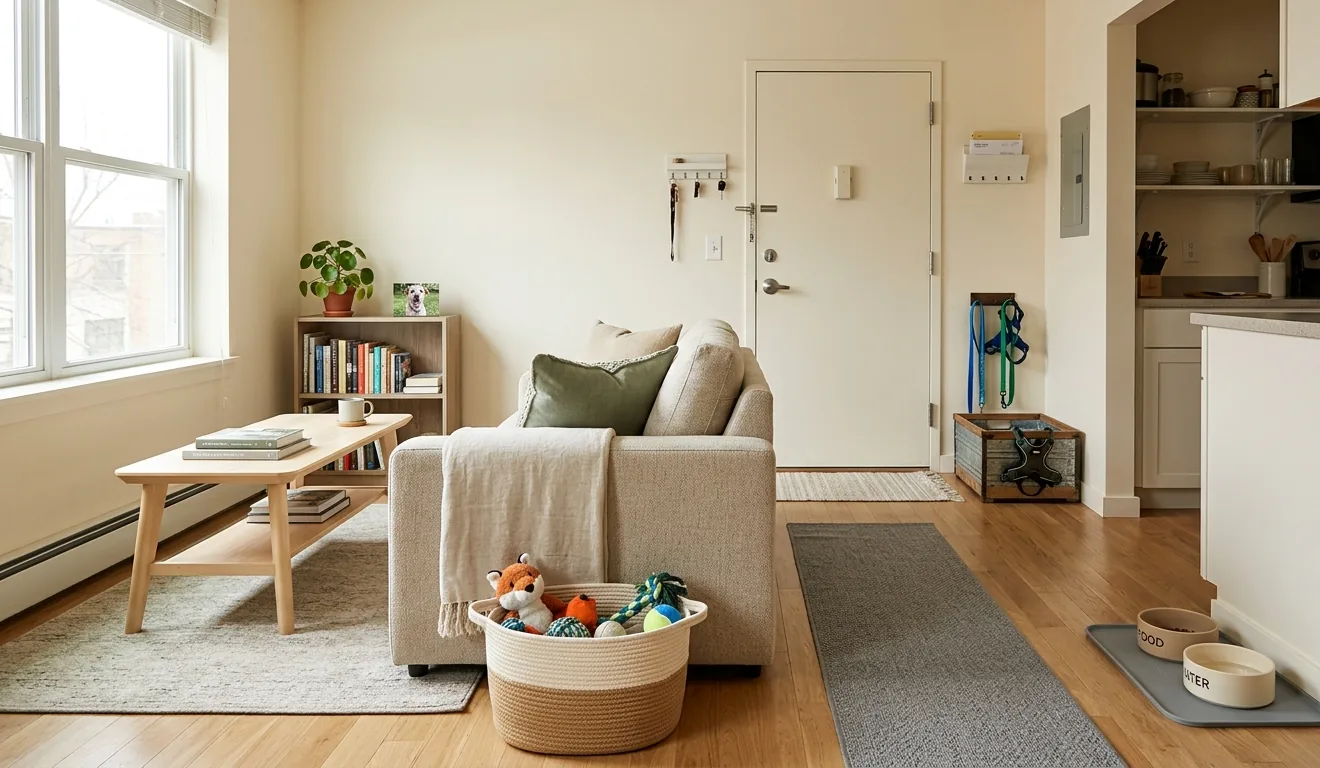
Pet food storage is usually the first clutter problem in a small apartment because bags are bulky, bowls need floor space, and treats migrate into every drawer. Start by separating daily food from backup food.
For daily use, keep only what you need near the feeding station:
- current food container or bag location
- scoop or measuring tool if used
- food and water bowls
- washable mat
- small towel or cloth for water splashes
- one small treat container if treats are part of your routine
For backup storage, use a closed bin, closet shelf, pantry section, or under-bed container if it fits safely and stays dry. Do not keep oversized food bags in the main walkway just because they are used often. The more visible and awkward the bag is, the more the whole apartment feels like a storage room.
Studio apartment example
In a studio, the feeding station might sit on a washable mat beside the kitchen cabinet, while backup food lives in a lidded bin at the bottom of a closet. Treats can stay in one small container near the leash station if you use them for walks, or in the food cabinet if they are mostly used at mealtimes.
One-bedroom example
In a one-bedroom, the daily feeding station can live in the kitchen or dining corner, while bulk food goes on a closet shelf or inside a bench with closed storage. Keep the scoop with the food instead of loose in a drawer so feeding does not require searching.
Litter, Scoop, and Waste Storage
Cat litter storage needs to balance convenience, odor control, and visual clutter. The easiest system is usually a small daily-use setup near the litter box and a separate backup storage spot.
Daily litter-area supplies may include:
- scoop
- waste bags or disposal system if used
- small broom, handheld vacuum, or dustpan
- litter mat
- small trash plan
- a small amount of top-off litter if your routine uses it
Backup litter can live in a closet, storage bench, cabinet, or lidded container if it stays dry and does not block access. Avoid stacking so much around the litter box that daily cleaning becomes annoying. If the scoop is hard to reach, the system is likely to fail.
For more help with the routine side, see the guide to litter box odor control for small apartments. Storage will not replace scooping, ventilation, or regular cleaning, but it can make those habits easier to maintain.
Entryway Pet Station for Walks, Bags, and Towels
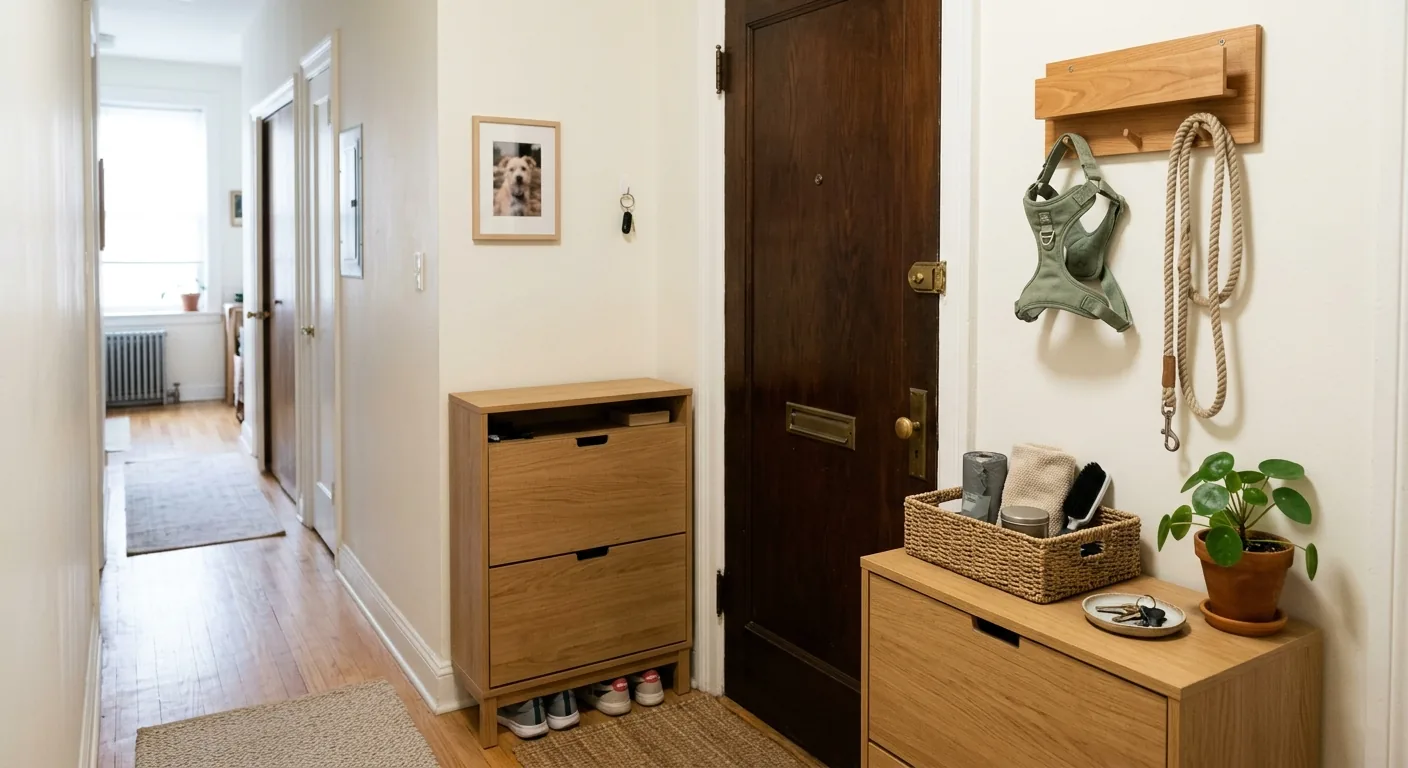
A small entryway pet station can make an apartment feel more organized immediately. It also reduces the common last-minute search for leash, harness, waste bags, towel, keys, or treats.
A compact station can include:
- one or two hooks for leash and harness
- waste bags in a basket, drawer, or wall holder
- small towel for paws, rain, or mud
- walking treats if you use them
- coat or sweater only if needed for your pet and climate
- small lint tool if hair gathers near the door
- keys or wallet only if the station doubles as your human exit zone
You do not need a mudroom. A narrow basket, one wall hook, or the side of a shoe cabinet may be enough. If you rent, choose removable hooks only if they are allowed and suitable for the wall surface. If wall hooks are not a good option, use a standing basket, over-door organizer, or a small tray on an existing shelf.
Cleaning Supply Organization for Pet Homes
Cleaning supplies should be easy for adults to reach and not easy for pets to access. In a small apartment, this usually means one cleaning caddy or one cabinet section instead of supplies scattered under every sink.
A practical pet cleaning caddy might hold:
- washable cloths or paper towels
- lint roller or reusable lint brush
- small trash bags
- pet-mess cleanup products appropriate for your household
- spare gloves if used
- small brush or dustpan
- laundry reminder card for pet bedding and throws
Keep cleaning products closed, labeled, and stored according to their instructions. Avoid leaving sprays, pods, wipes, or scented products on open low shelves where a pet can reach them. This is home-organization guidance, not a substitute for product-label instructions or professional advice.
For tool choices, the guide to pet hair cleaning tools for apartments can help you decide which cleaning categories are actually useful before you buy duplicates.
Toy Rotation Without a Toy Explosion
Toy clutter grows when every toy stays visible all the time. A toy rotation system keeps a few toys accessible and stores the rest for later.
Try a three-bin system:
- Current toys: a small basket with a few toys your pet is using now.
- Rotation toys: a closed bin, drawer, or shelf for toys to swap in later.
- Wash or repair pile: soft toys, mats, or washable items waiting for laundry or inspection.
For dogs, the visible basket might hold two or three toys, with supervised or messy items stored separately. For cats, the visible group might include a wand toy stored out of reach when not in use, a few small toys, and a scratcher or enrichment item that fits the floor plan.
The goal is not to deprive your pet of choices. It is to keep toys interesting, reduce tripping hazards, and make cleanup possible in a small room.
Crate, Carrier, and Bed Storage Integration
Crates, carriers, and beds are not just pet gear; in a small apartment, they are furniture-scale objects. If they are placed randomly, they can make the whole home feel crowded.
Ask three questions before choosing a spot:
- Does this item need to stay open every day, or can it be stored between uses?
- Does it block walking paths, closet doors, heat vents, or furniture access?
- Can nearby supplies be reduced so the area stays calm and usable?
For puppies, the puppy apartment setup checklist covers crate/rest-zone placement, cleaning stations, and first-week storage. For a general storage system, keep only daily bedding, crate mat, or carrier blanket nearby. Store extra bedding, seasonal covers, and rarely used travel items in a closed backup bin.
If a carrier is used only for vet visits or travel, it may fit on a closet shelf, under a bed, or inside a storage bench. If your cat uses the carrier as part of normal home life, it may need a more visible, comfortable location. Choose based on real use, not on what looks cleanest in a photo.
Hidden Storage Ideas That Still Stay Usable
Hidden storage works only if you can still reach the item when you need it. A beautiful hidden bin that requires moving three chairs will not become part of a daily routine.
Useful hidden-storage options include:
- under-bed bins for backup food, extra blankets, or seasonal gear
- storage ottoman for toys, towels, or walking supplies
- lidded basket near the sofa for pet blankets
- bench with closed storage near the entry
- cabinet shelf for grooming supplies and backup bags
- closet floor bin for extra litter or food
- slim cart in a pantry, laundry nook, or hallway closet
Use hidden storage for backup supplies, not for every daily task. Daily supplies should be reachable enough that you put them back.
Renter-Friendly Vertical Storage
Vertical storage can help small apartments, but it should not make the room feel crowded or create a hazard. Use vertical space for light, frequently used items, not huge unstable stacks.
Renter-friendly options may include:
- over-door organizer for leashes, grooming tools, or small towels
- freestanding shelf with closed bins
- hooks on existing furniture or allowed wall surfaces
- stackable bins in a closet
- narrow rolling cart for feeding or cleaning supplies
- labeled baskets on a bookcase shelf
Avoid drilling, heavy wall-mounted systems, or adhesive overload unless you know what your rental allows and what the surface can handle. If the setup feels temporary, choose freestanding storage you can take with you.
Multi-Pet Storage Without Mixing Everything Together
Multi-pet homes need clearer storage, not necessarily more storage. Mixing every pet’s supplies in one giant bin can lead to confusion, overbuying, and daily mess.
Use labels or divided zones for:
- each pet’s food
- special feeding tools
- leashes, harnesses, or walking gear
- grooming tools
- medications or medical supplies only as directed by a veterinarian, stored safely and separately
- toys that should not be shared
- bedding or crate items
Keep shared supplies together: waste bags, general cleaning cloths, washable throws, backup towels, and some toys if sharing is appropriate for your pets. If there is tension, guarding, aggression, or serious conflict between pets, treat that as beyond an organization article and seek qualified help.
Three Realistic Apartment Storage Layouts
Layout 1: Studio with one closet
- Feeding station near the kitchen on a washable mat.
- Leash and bags in a small entry basket.
- Cleaning caddy on the top closet shelf or an adult-only cabinet.
- Backup food and litter in lidded bins at the bottom of the closet.
- Toys in one small basket beside the sofa, with extras under the bed.
Layout 2: One-bedroom with narrow entry
- Entry station on the side of a shoe cabinet or freestanding rack.
- Food in a kitchen cabinet with scoop inside the container.
- Litter supplies near the box, but backup litter in a closet.
- Pet hair tools stored in a cleaning caddy near the hallway closet.
- Carrier on a closet shelf or under-bed storage if not used daily.
Layout 3: Shared apartment with limited common space
- Keep pet food, backup supplies, and grooming tools in your room or assigned closet section.
- Use a small shared entry basket only for daily leash, bags, and towel.
- Store cleaning tools where all approved household members can find them.
- Keep visible toys limited in common areas.
- Label bins so pet supplies do not blend into roommate storage.
A Weekly Pet Storage Reset Workflow
A small weekly reset prevents pet supplies from spreading across the apartment.
- Return leashes, bags, and towels to the entry station.
- Refill the food or treat container if needed.
- Check the litter or potty-care supplies and restock what is low.
- Put loose toys into the current toy basket.
- Move a few toys into or out of the rotation bin.
- Wash or collect pet blankets, towels, or crate bedding as needed.
- Restock the cleaning caddy.
- Remove packaging, empty bags, duplicate tools, and broken items.
- Put backup supplies back into closed storage.
This should take 10 to 20 minutes once the system exists. If it takes much longer, the setup may have too many categories, too many duplicates, or storage that is too hard to reach.
What Not to Overbuy
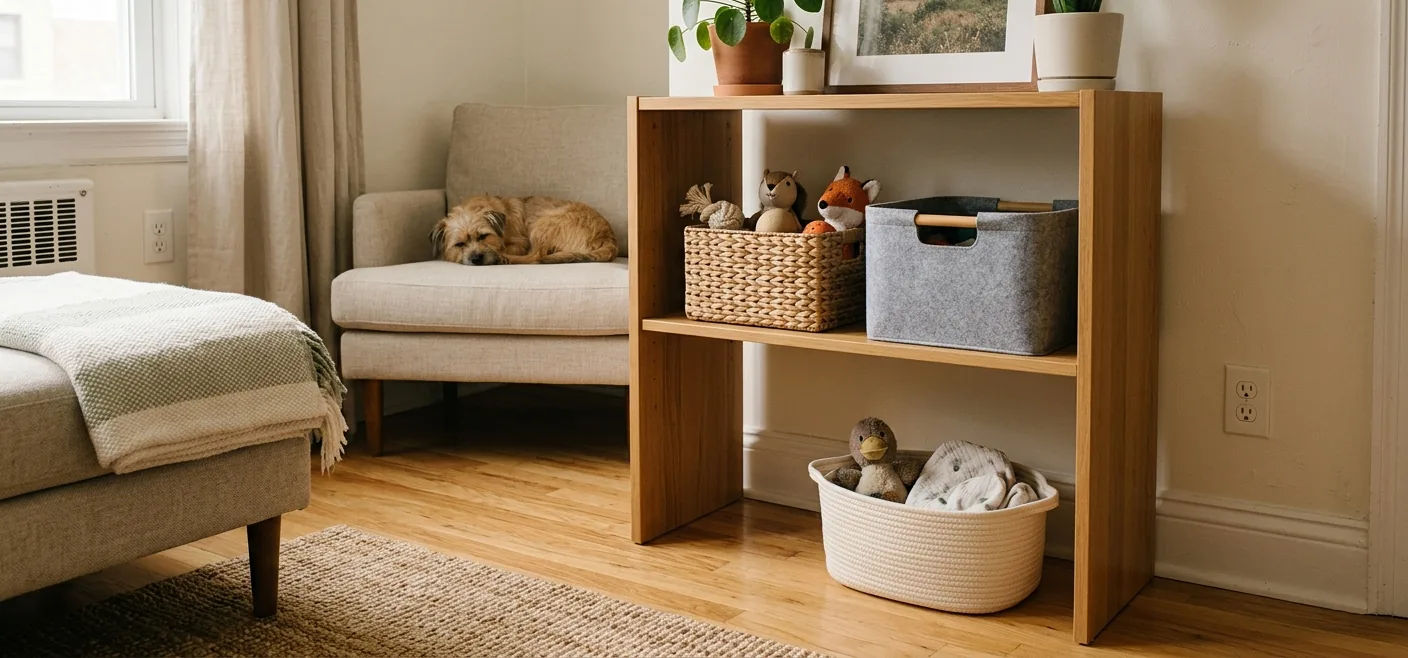
Storage problems often start with good intentions. Before buying another organizer, check whether you are storing too many duplicates.
Delay or skip:
- oversized bins that do not fit your closet or under-bed clearance
- decorative baskets that shed, snag, or cannot be cleaned easily
- open shelving that makes every pet item visible
- multiple treat containers when one would work
- bulk food or litter quantities that block daily living space
- specialty organizers for routines you do not actually have yet
- toy bins so large they encourage toy clutter
- wall systems that may not suit your lease or future apartment
Buy slowly. A small, boring bin that gets used every day is better than a matching organizer set that creates more maintenance.
FAQ
Where should I store pet food in a small apartment?
Store daily pet food near the feeding area if it stays dry, closed, and out of the main walking path. Store backup food in a closet, pantry section, under-bed bin, or closed container that does not make daily movement harder. Keep the scoop with the food so feeding does not require searching.
How do I hide pet supplies without making them hard to use?
Hide backup supplies, not every daily item. Daily leashes, bowls, scoops, and cleaning cloths should be close to the task. Extra litter, backup food, seasonal gear, spare bedding, and rotation toys can go in closed bins, cabinets, benches, or under-bed storage.
What is the best way to organize dog walking supplies in an apartment?
Create one entry station with leash, harness, waste bags, towel, and any small walking items you use often. If you have no entryway, use a small basket by the door, a tray on a shelf, a freestanding rack, or an over-door organizer if it works for your rental.
How can I organize cat litter supplies in a small apartment?
Keep the scoop, waste bags or disposal plan, mat, and small cleaning tool close enough to the litter box that daily care is easy. Store extra litter separately in a dry closed container, closet, or cabinet so the litter area does not become a clutter pile.
How many pet toys should be out at once?
There is no perfect number, but many small apartments work better with a few visible toys and the rest in a rotation bin. Keep enough variety for normal play, then swap toys weekly or when interest drops. Store messy, supervised, or delicate items separately.
How do I organize supplies for multiple pets?
Separate items that are pet-specific, such as food, harnesses, grooming tools, and bedding. Keep shared supplies together, such as waste bags, general cleaning tools, towels, and some toys if sharing is appropriate. Use labels or divided bins so the system stays clear.
Are storage benches and ottomans good for pet supplies?
They can be useful for backup toys, towels, blankets, and walking supplies if they are easy to open and clean. They are less useful for supplies you need many times a day if opening them becomes annoying. Choose based on how often the item is used.
How do I keep pet storage from looking messy?
Reduce visible categories. Keep daily supplies in a few intentional stations, move backup supplies into closed storage, use one toy basket instead of toys across the room, and reset weekly. The goal is not to hide all evidence of pets; it is to make the apartment easier to live in.
Final Takeaway
Small apartment pet storage works when it supports real routines. Start with one feeding station, one entry station, one cleaning caddy, one toy rotation bin, and one backup storage zone. Once those basics have a home, the apartment feels calmer because pet care has a repeatable path instead of spreading across every surface.